The Condor Flies
High over the Pinnacles
The geocache was about steps cut into the rock and safety rails, but it was not the main attraction. We went to the Pinnacles National Park to see the flight of the California Condor.
In Pleistocene times, condors were found across much of North America. Even in historic times, the birds ranged from British Columbia to Baja California. By 1940, they were seen only in the Sesepe (Southern California). By 1985, only 9 birds remained in the wild, with others in zoos
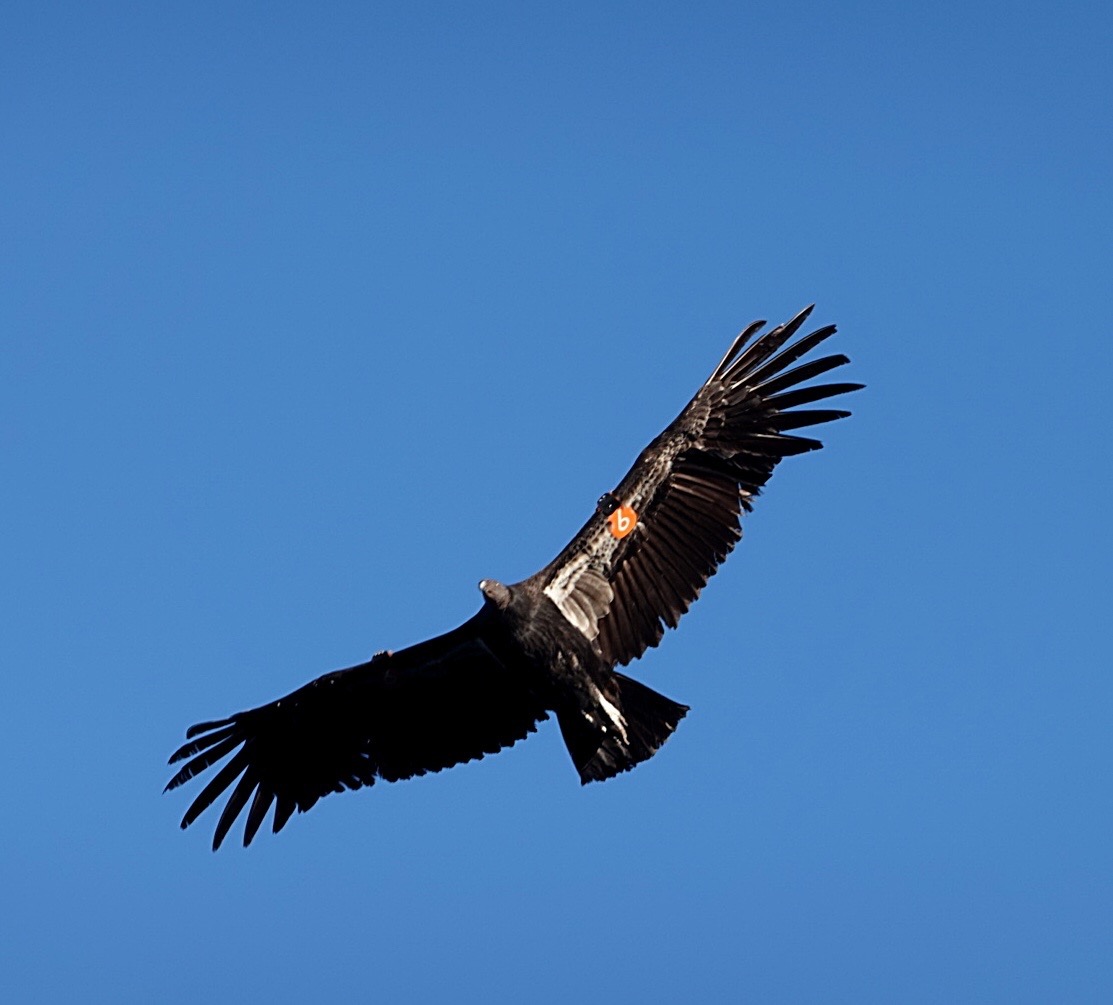
On April 19, 1987 the last free-flying California condor was captured to begin a breeding program that reversed their fortune. They are now reclaiming the sky. We saw a newly hatched condor in Zion, and in the Pinnacles a record number of 119 were observed in 2025.
The California Condor isn’t a bird of beauty in the way people talk about songbirds. It’s a bird of function, a massive, prehistoric machine for recycling death. Seeing one bank over the ridge is breathtaking, its primary feathers spread like fingers, feeling the texture of the heat. They rarely flap. Flapping is for the restless. The condor just occupies the thermal, spiraling up on the sun’s energy, a heavy weight held aloft by nothing but the earth’s breath.
For a long time, the condor’s habitat was steadily shrinking. The primary cause was lead poisoning, which they ingested from the carrion felled by hunter’s bullets. Eventually California banned lead bullets, but no other state has followed this lead. The birds are now monitored and tested regularly to measure their lead contamination or other issues. For all their strength and resilience they still occupy a fragile spot.[1]Arizona and Utah account for the lead poisoning deaths.
They’re back on these crags, sitting on the volcanic ramparts like old men in orange cowls, watching. They’re social, messy, and intelligent in a way that predates our maps. They wait for the deer to fall or the calf to stumble in the brush, doing the hard, necessary labor of taking what they find. Then they reach for the sky..
Different nations have different stories and rituals about the condor. To the Amah Munson, “The condor is the only bird that is strong enough to fly to the other side. To our ancestors. The condor would carry our messages and our prayers to our ancestors who had passed and bring their messages back to us.” (Valentine Lopez.) Other nations crafted elaborate capes made of condor feathers for ceremonial use.
The Yuroks know the condors as prey-go-neesh. Tribal Chairman Joseph James, stated they use use condors to carry prayers into the high country. “They’re part of our circle of life and the balance of the natural world. For us, everything’s about maintaining that balance.”
We followed a trail past a geocache that invited us to step right up. We took the step, and from there, we continued until the condors passed.
My Log
This was the longest and highest I have walked in quite a while. A year ago I could only walk a few steps without assistance so getting up here from the Gulch was a victory. By the time I got back to the trailhead my body was going in three different directions – held together by two walking sticks – so I provided a bit of comic relief. But what an amazing adventure, following the flight of the condors.
The cache was an unexpected surprise – it was fun to make my way carefully up the steps and rail. I counted what I needed to count and lost track more than once. Then we continued. We reached the end of a trail segment and had not seen a condor, except perhaps from a distance. The last time I was in the Pinnacles, earthcaching with friends, I had not seen any, so we took a different trail. And then one flew past us as we came down a section of the stairs.
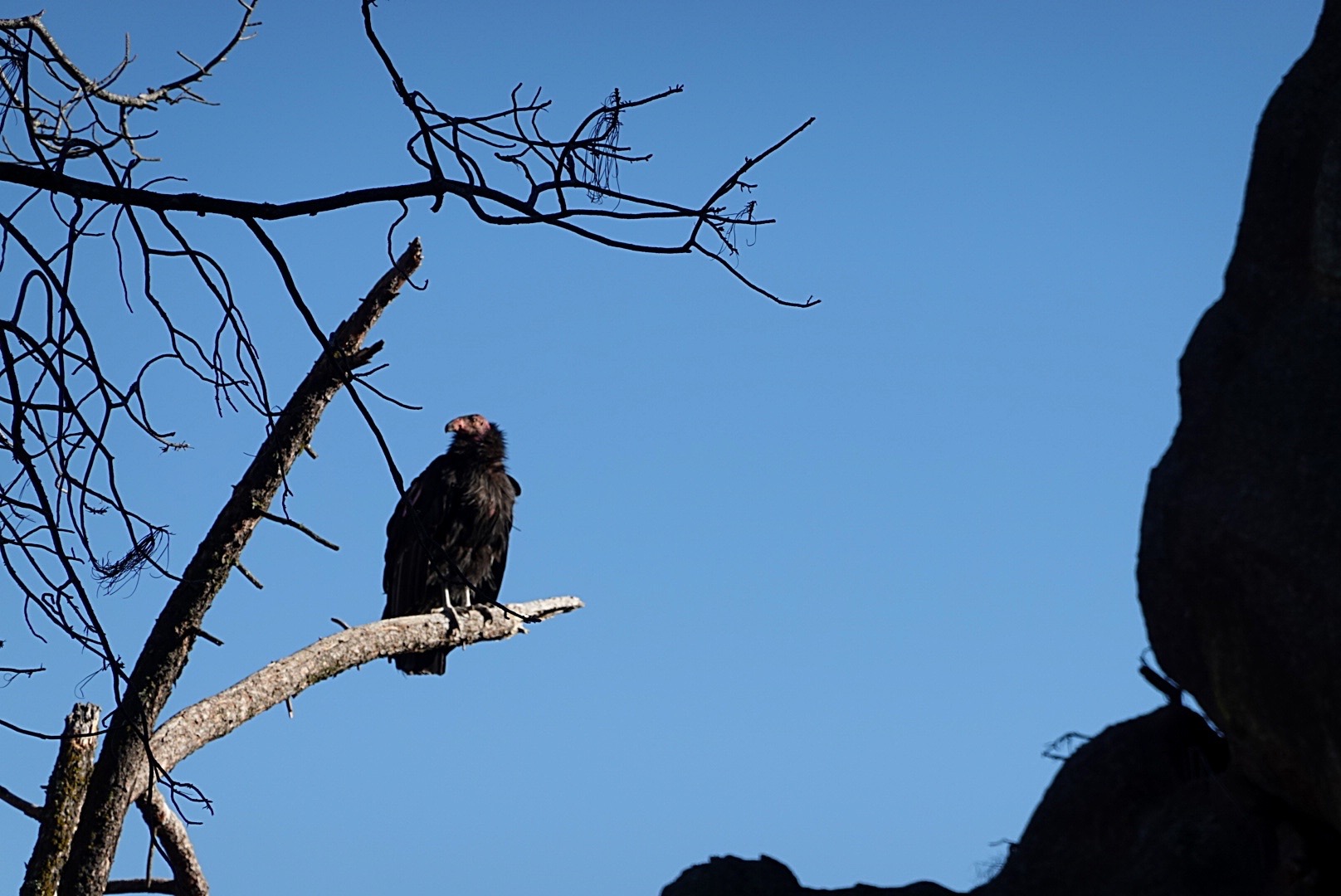
Soon after, a condor landed in a nearby tree, perhaps guarding an egg (we were later told one was in that area). Others circled overhead. I wish I had been able to carry one of my better cameras. Those that did made me a little jealous but sometimes the best pictures are those I can only remember, for as long as I can.
When I was young I lived on the other side of the mountains from their remaining refuge in the Sespe. Every year the numbers would dwindle. 57 one year stood out for me, the first time I was old enough to pay attention
With 22 left, the captive program brought them back. It restored not only the condor, but that part of out own soul that is lost when the last of a species dies. They might be out of immediate danger but their future is far from assured. They are still poisoned with lead and subject to changing conditions brought by climate change. The watch continues.
02/26/2021
Note: We will be traveling with limited connectivity so this site is taking a hiatus for the next three weeks. Some smaller updates may be posted from time to time on BlueSky as time and connections allow.
Notes
| ↑1 | Arizona and Utah account for the lead poisoning deaths. |
|---|