Salvation Mountain
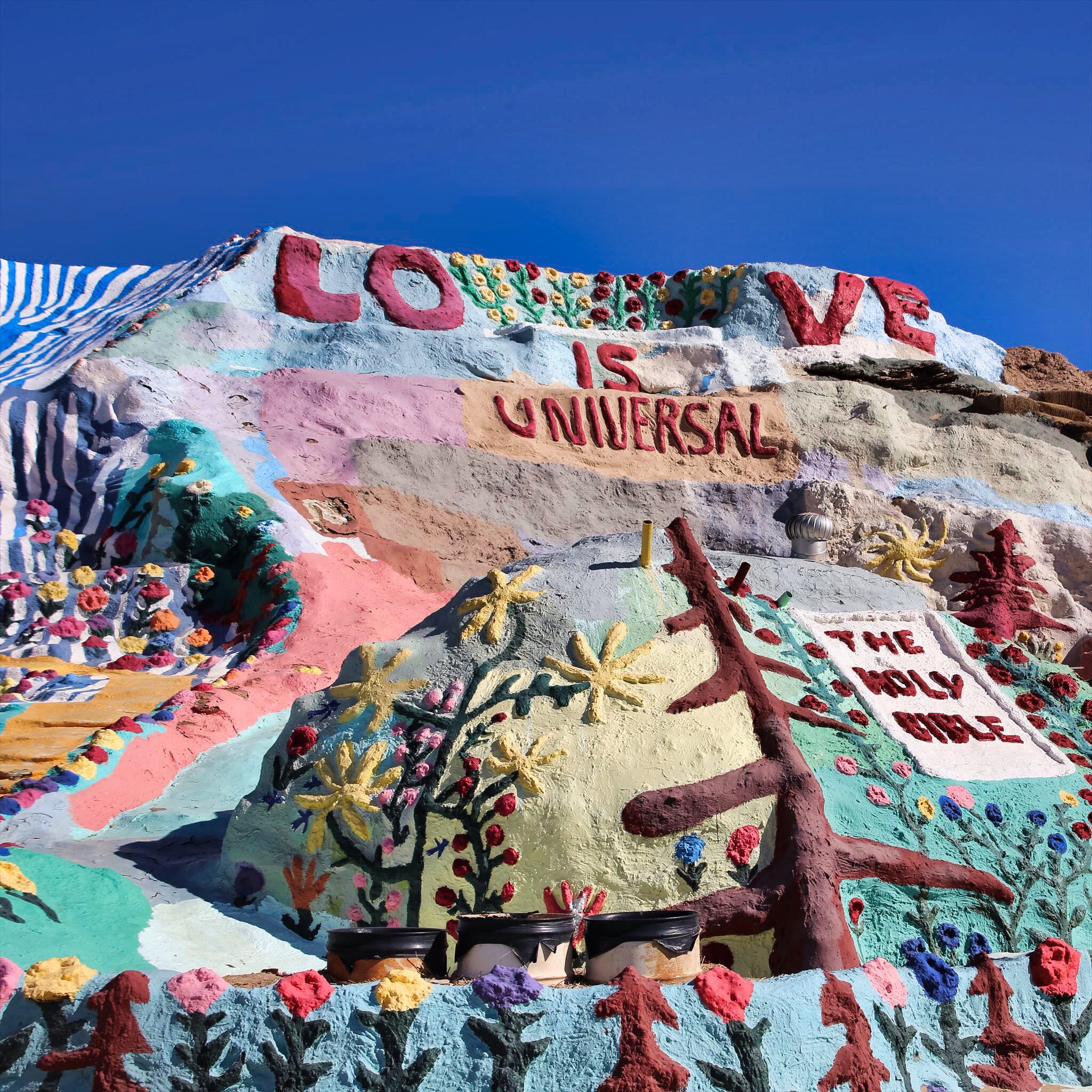
More than just another geocache location, Salvation Mountain is an expression of faith. As such, Leonard Knight would never finish it until he was unable to continue, just before his death.
The building of Salvation Mountain in itself was a test of faith. Knight’s first efforts did not last. He tried to build a giant balloon, but it never flew. The initial mountain he started collapsed under its own weight. He had to believe he was called to build it and learn how to do it right. The final mountain is a solid three stories high. It used over 250,000 gallons of donated paint and material from a local dump to construct and maintain it. Knight was in it for the long haul.
Where would this be but the desert? People have often come to such places on a vision quest or in search of the mystic. As a practical matter, however, it might have taken an almost forgotten place, where no one would care, for Knight to have room to paint or the freedom to do it.
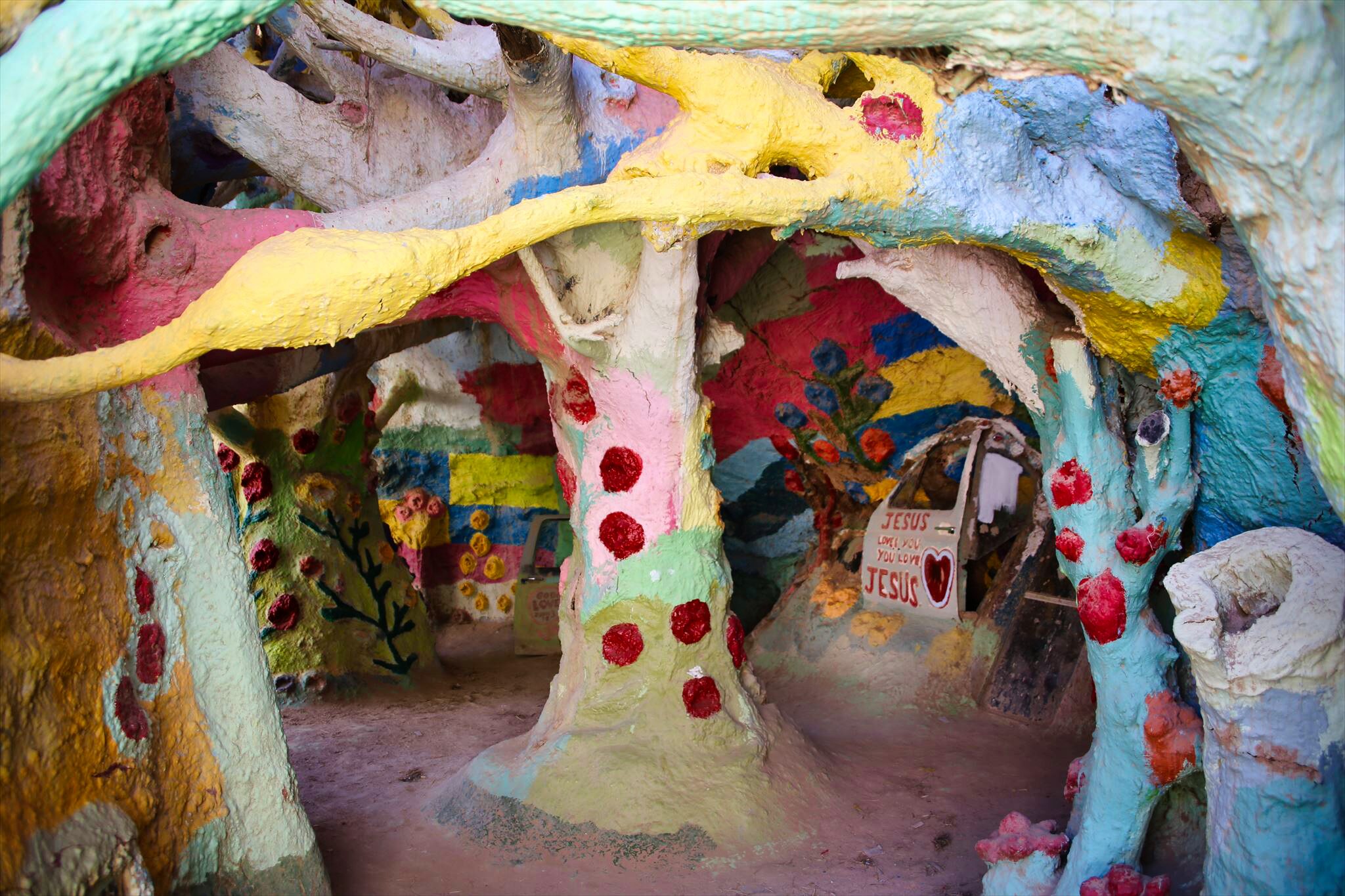
He faced challenges that went beyond its construction. The state eventually was concerned about the environmental impact, but the mountain passed all of its tests. Others have sought to take over the property. It is now protected as a historical site, but that is still a slender thread. Over the years, the nonprofit group overseeing the mountain tried to buy it, but they were unable to raise the money. Yet, the mountain remains.
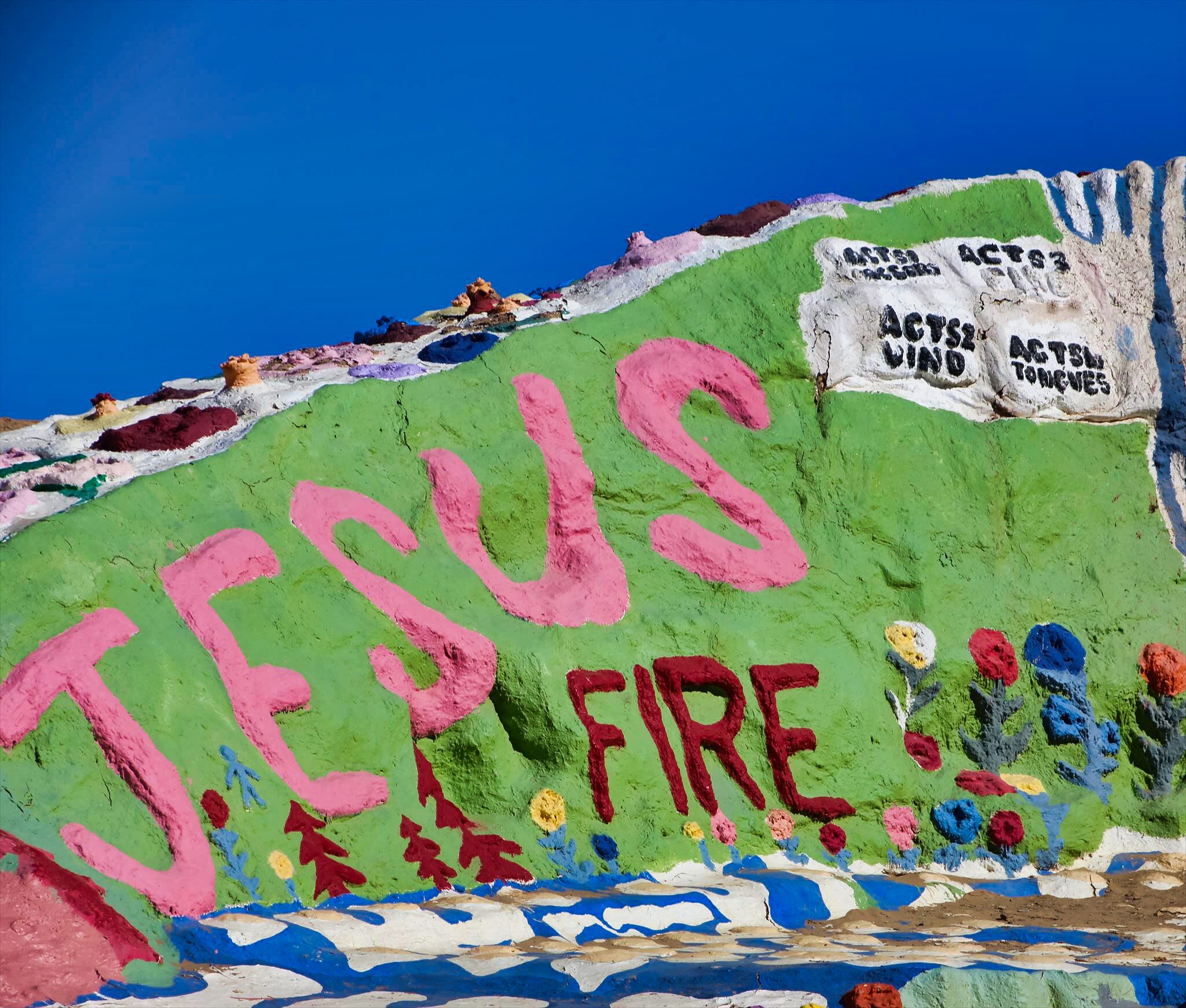
The mountain rises like the Yellow Brick Road to call its visitors. Knight’s vision of salvation was based on the theme found repeatedly at the site, “God Is Love.” I thought of the Christian mystic, Julian of Norwich, who had the vision that all will be well, within God’s love. Some people want to use religion to condemn. Others believe that God will ultimately win, that salvation and love encompass all. I don’t know much about Knight’s theology, but I believe that all will be well again.
The message is personal. Ultimately, it is not a place for theology, but something to experience. Knight draws you in and invites you to be awestruck. Most of us will experience that only from a distance. The E Clampus Vitus monument says it all: “Salvation Mountain is the culmination of a personal religious intensity few mortals will ever experience.”
It is true outsider art. Knight was embarrassed to call himself an artist, but the mountain has been designated a national folk art site and recognized as a national treasure. It was built as an act of faith in a place aptly called Slab City. It is a place for outsiders, even as Knight’s faith is based on an outsider. How could it be preserved except for the way it has been called to outsiders who help maintain it? It is a faith that must be renewed daily.
“I believe that God is love, and I believe that Jesus is beautiful and pretty, and we should be comfortable talking about God’s love and the prettiness of God.” — Leonard Knight
My Log
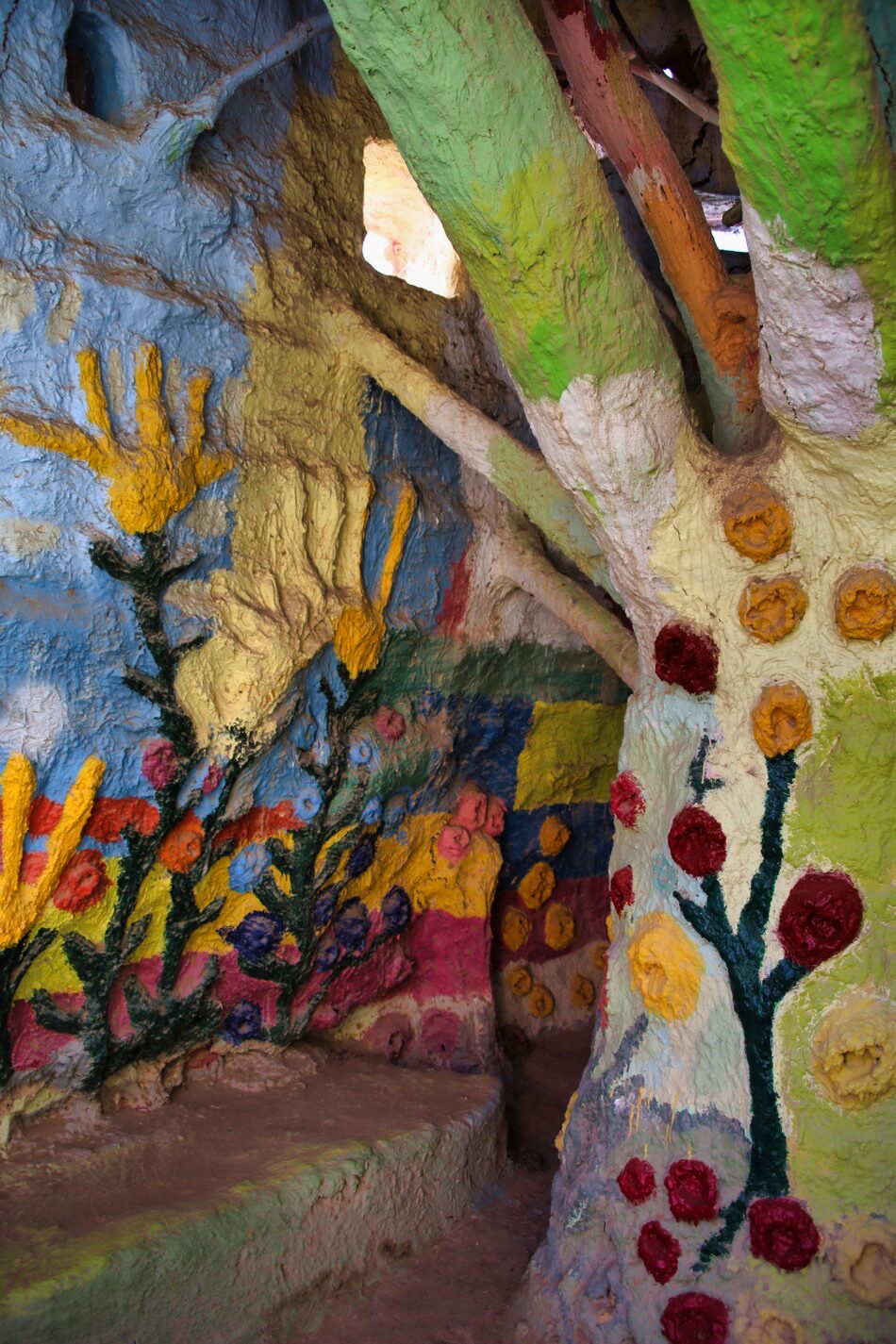 Niland is a strange place, perhaps, to be called to find salvation. But people come to the desert for all sorts of reasons: some for a mystical experience; some to meet the people from Venus; some to find space for an RV and a measure of freedom.
On our way here, we stopped at Bombay Beach and spoke to someone who seemed like he was hanging on to life itself as the world passed him by. Slab City was home to squatters, artists, and snowbirds with no need to pay rent. Leonard came here and brought his own vision – expressed it in a mixture of adobe and paint.
It invites interesting questions. If God is love and love is universal, what does repentance mean? We read of a Point when all things become new. All things. Did Leonard’s spirit dip into that well and, with the art he found, made from items left in the desert dump, begin to paint a new heaven and new earth? Meister Eckhart preached that if he split a piece of wood, he would find God. Did Knight see something that transcends time and space?
As I write this, I am listening to a song about waiting for a chance to shine. Perhaps Leonard found a way to shine. If the colors he used hold true, it seems he did.
When we visited, people from the foundation were at work fixing broken adobe. A difficult task in a harsh environment. But I hope that the vision here is preserved – even if expressed in terms different from those many might use. There was a sense of the Authentic here. And Color!
11/13/2015