Between The Worlds
— The Carrot Men
“The only other thing we found of any interest was a geocache box that was stashed beneath a boulder.” – gjhikes
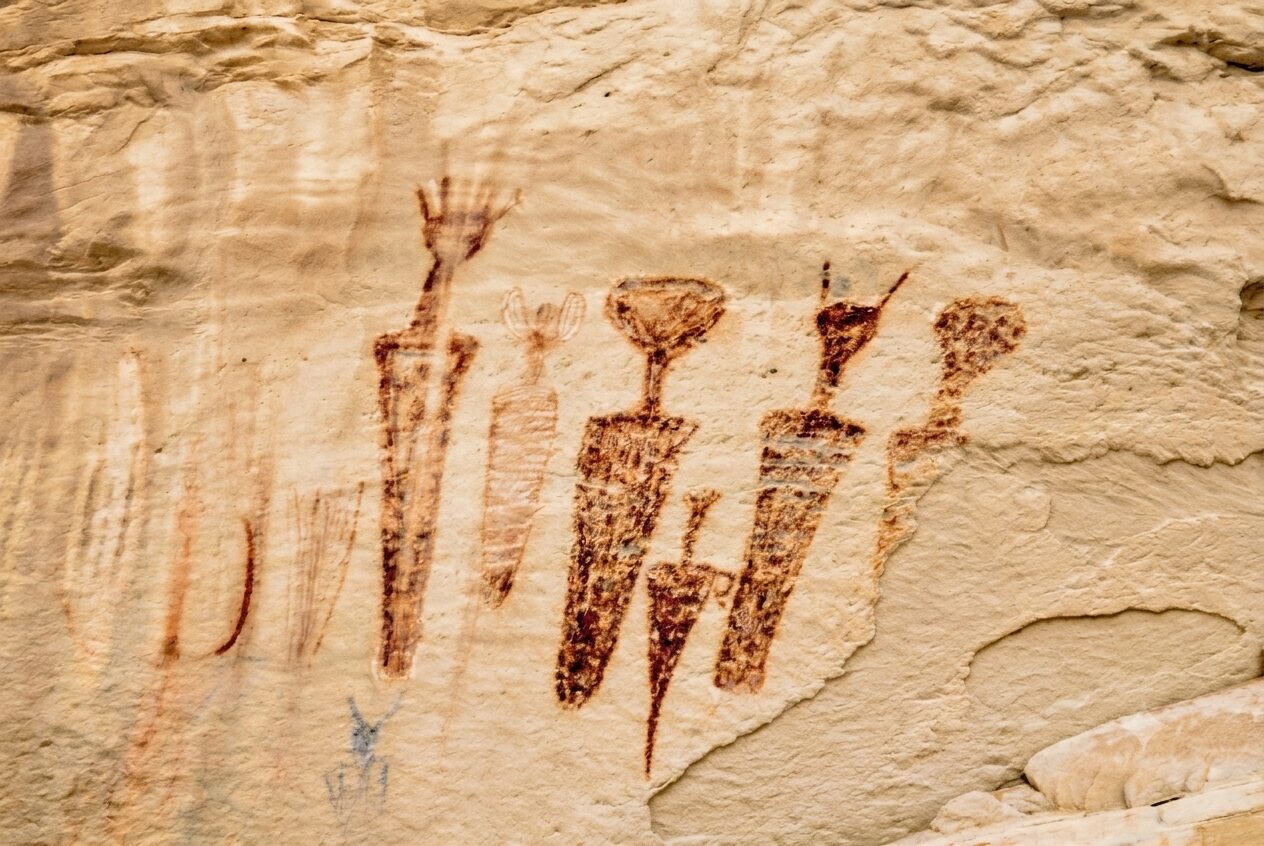
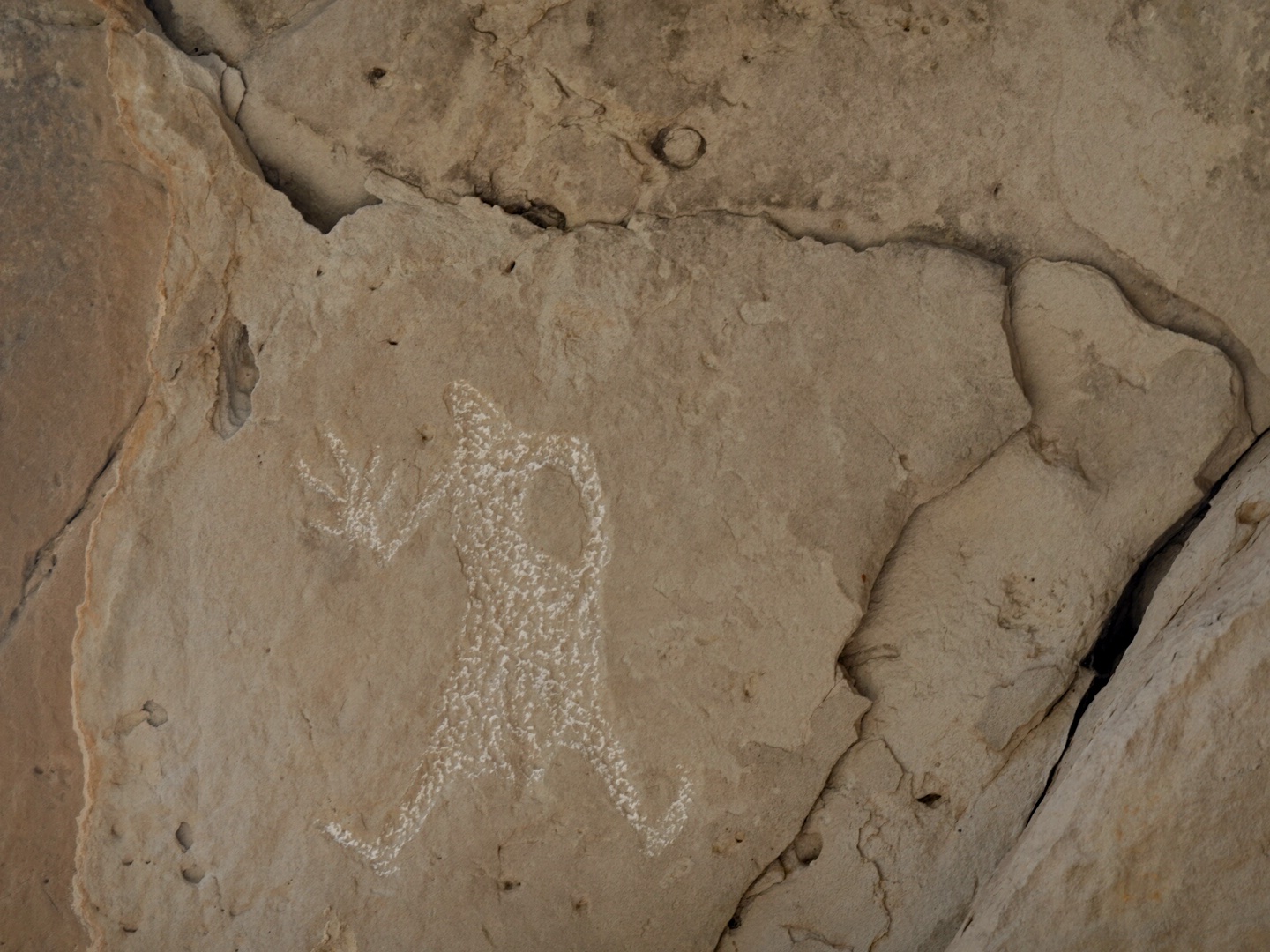
The Carrot Men rock art panels take you between the worlds. it is in the homelands of the Ute Nation and some place beyond.
A few years ago, a border official asked why I was interested in going to a rock art site. I thought about it for a second.
The short answer focused on human expression and cultural understanding — the things that become part of the world’s heritage.
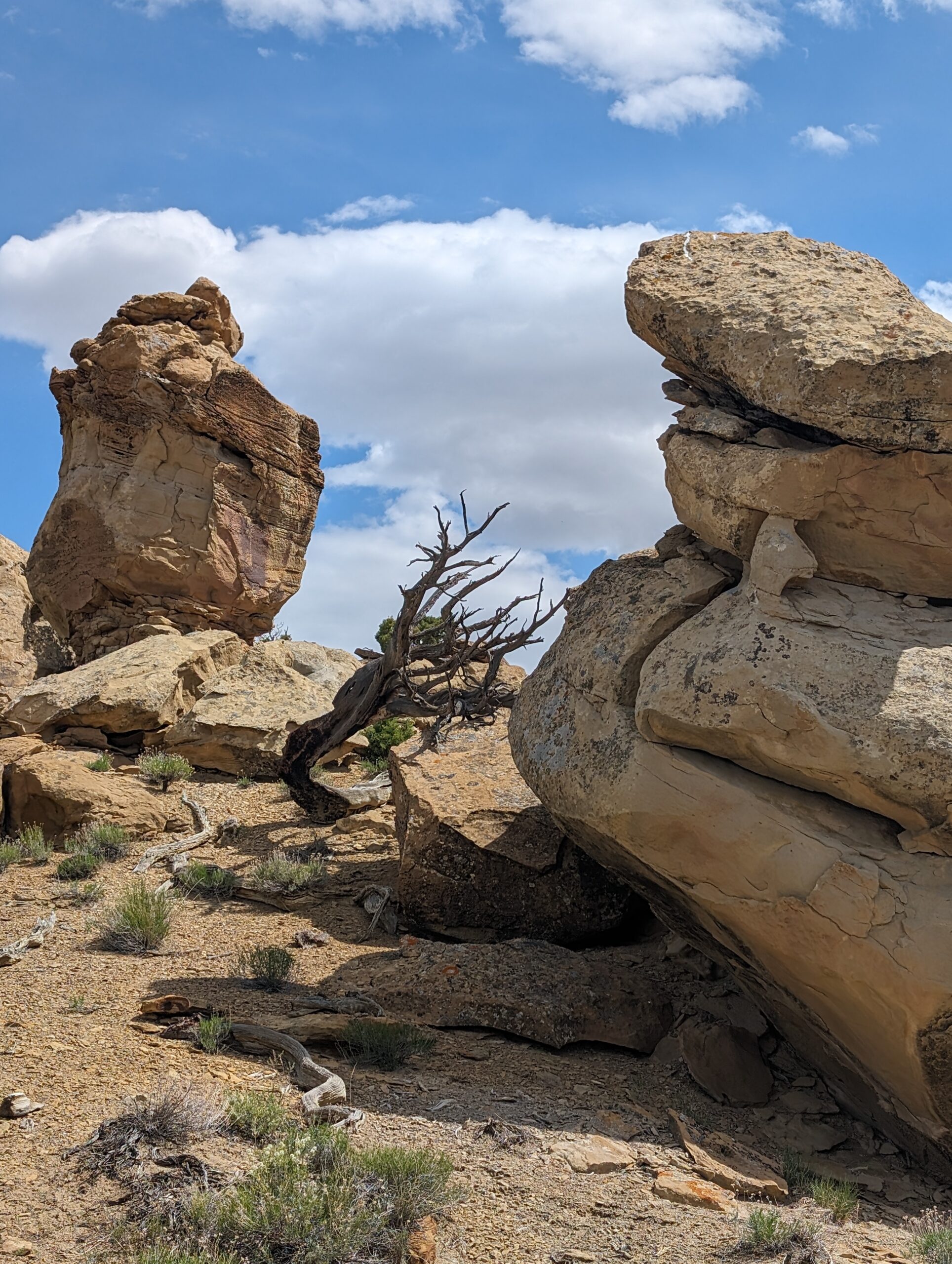
The long version involved places of power. Rock art remains anchored to the bedrock where someone stood hundreds or thousands of years ago, leaving a deliberate mark on the world. A panel is part of a landscape, the light at certain hours or the acoustics of a canyon wall. Above all is the compelling pull of mystery. A panel takes the viewer to the boundary between clear intention and deep enigma.
Rock art can transform the viewer, but when I was asked at the border, I gave him the short version rather than try to explain places where words fail.
My Log
This. The kind of experience that should define geocaching.
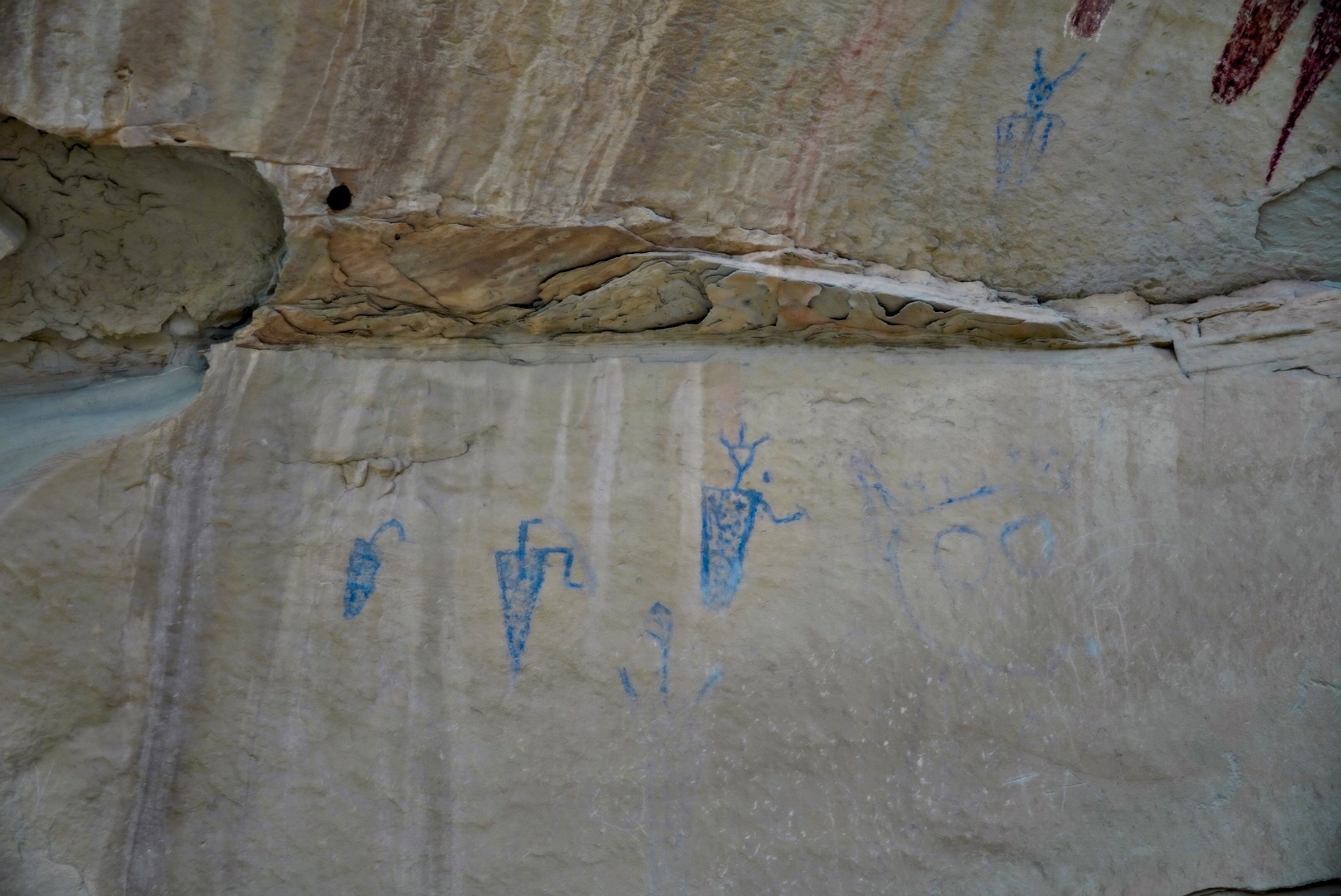
There’s a silence out here that’s not empty. You walk into a world where the human footprint is undefined, and the past is etched into stone. This isn’t about looking at pictures. It’s about encountering something old, something from a time when the boundary between life and… whatever else is out there… was thin.
The rock here are not just markings; they are transmissions.
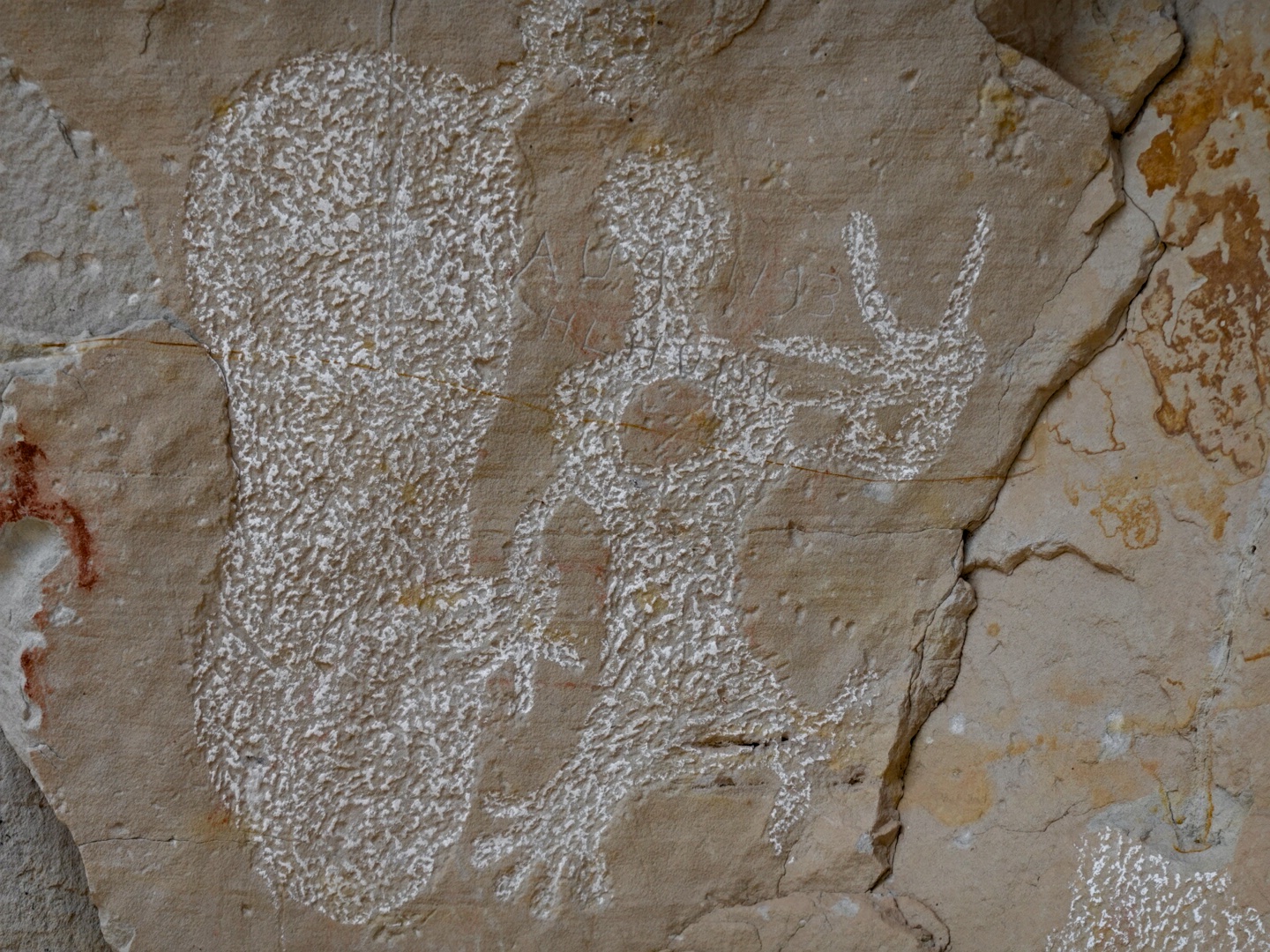
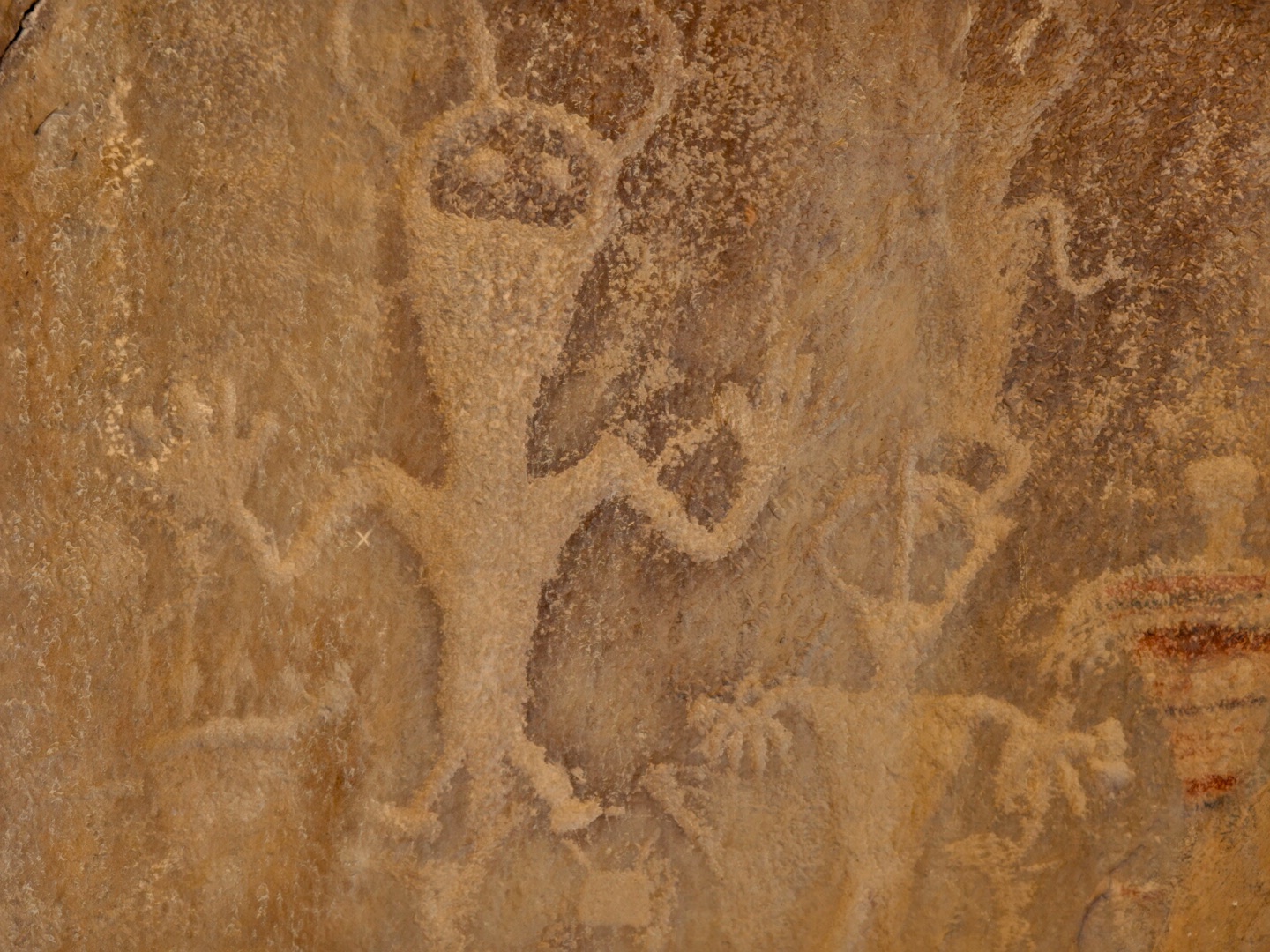
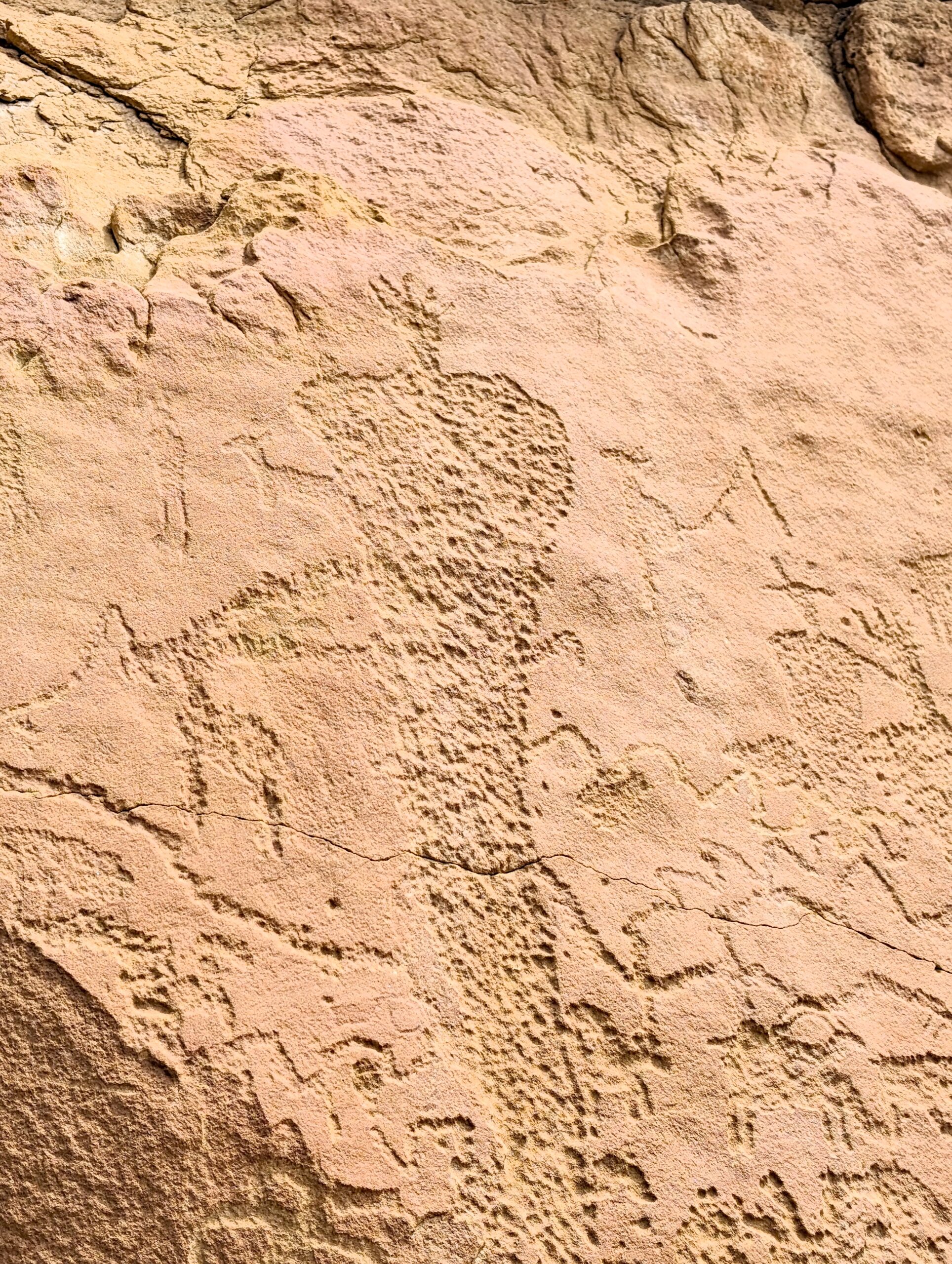
The Fremont stuff is everywhere, relatively speaking. They farmed, they lived, and they carved into the rock. It’s ground in, pounded deep, and often depicts the world they knew: bighorn sheep, hunters. There’s a vital, physical presence to them. You feel the sweat and the sun of a thousand years ago, but still don’t know if a sheep is really just a sheep. There are figures that could be a holy person, a vision, or an otherworldly visitor — but it starts with what we know.
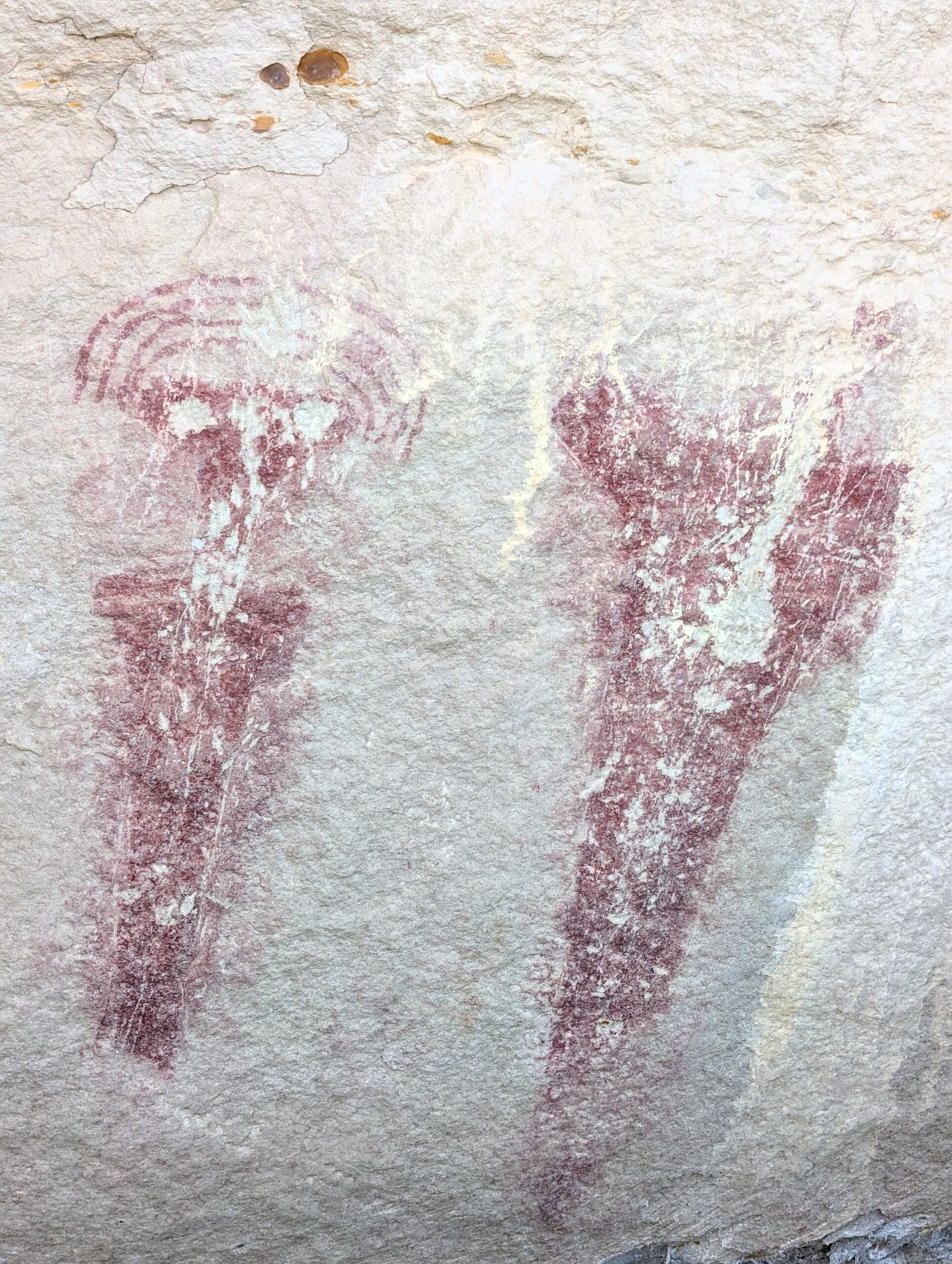
But then you find the other ones. The Barrier Canyon style. If the Fremont is the daylight world, the Barrier Canyon is the dusk. Their figures don’t seem to be walking on the earth so much as drifting through it. They are less painted on the rock than they are emerging from it, like spirits passing through a wall of time.
And it’s the color that reaches deep. Blue paint. Not the reddish hematite that fades to dust, but a specific, vibrant, cerulean blue. It’s an anomaly. Blue was rare, hard to make, and it meant something. It pops against the tan stone, a signal flare from another reality. They say this pigment was made from copper minerals like azurite, brought from great distances. Standing in front of a Barrier Canyon figure, its arms sometimes raised, its body decorated, and blue. It’s unsettling.
It’s mystical, not in a soft, new-age way, but in the tough manner of the desert. These aren’t simple icons; they feel like communication with another state of being. The Barrier figures often have no facial features, just a broad, flat gaze that seems to look through you and into the emptiness of the surrounding canyons. They are between two worlds, standing as sentinels of a reality where the line between natural and supernatural is entirely erased.
It’s an aggressive kind of peace. It forces you to be quiet, to just sit on a rock and stare at a painting until the figure starts to hum. This art doesn’t ask for your interpretation; it just exists. I enjoy looking but do not attempt to ascribe meaning to the art. I have no idea what the images meant to the creators so I let any explanations be. The site is impressive on its own terms
I acknowledge that the Carrot Men are in the ancestral home of the Ute Nation..[1]It was also interesting to see this cache mentioned in the gjhikes information for the Carrot Men. I might have missed the faint yellow teepees if gjhikes had not identified them. They date some of … Continue reading
05/19/2024






Notes
| ↑1 | It was also interesting to see this cache mentioned in the gjhikes information for the Carrot Men. I might have missed the faint yellow teepees if gjhikes had not identified them. They date some of the work to after the Spanish arrival, when the Utes acquired horses. I get much of my information from that site and highly recommend it. Their gpx list of rock art site sites is the starting point of any trip to the Southwest. |
|---|