Frank Sam’s Cabin
And The Mono Lake Basin
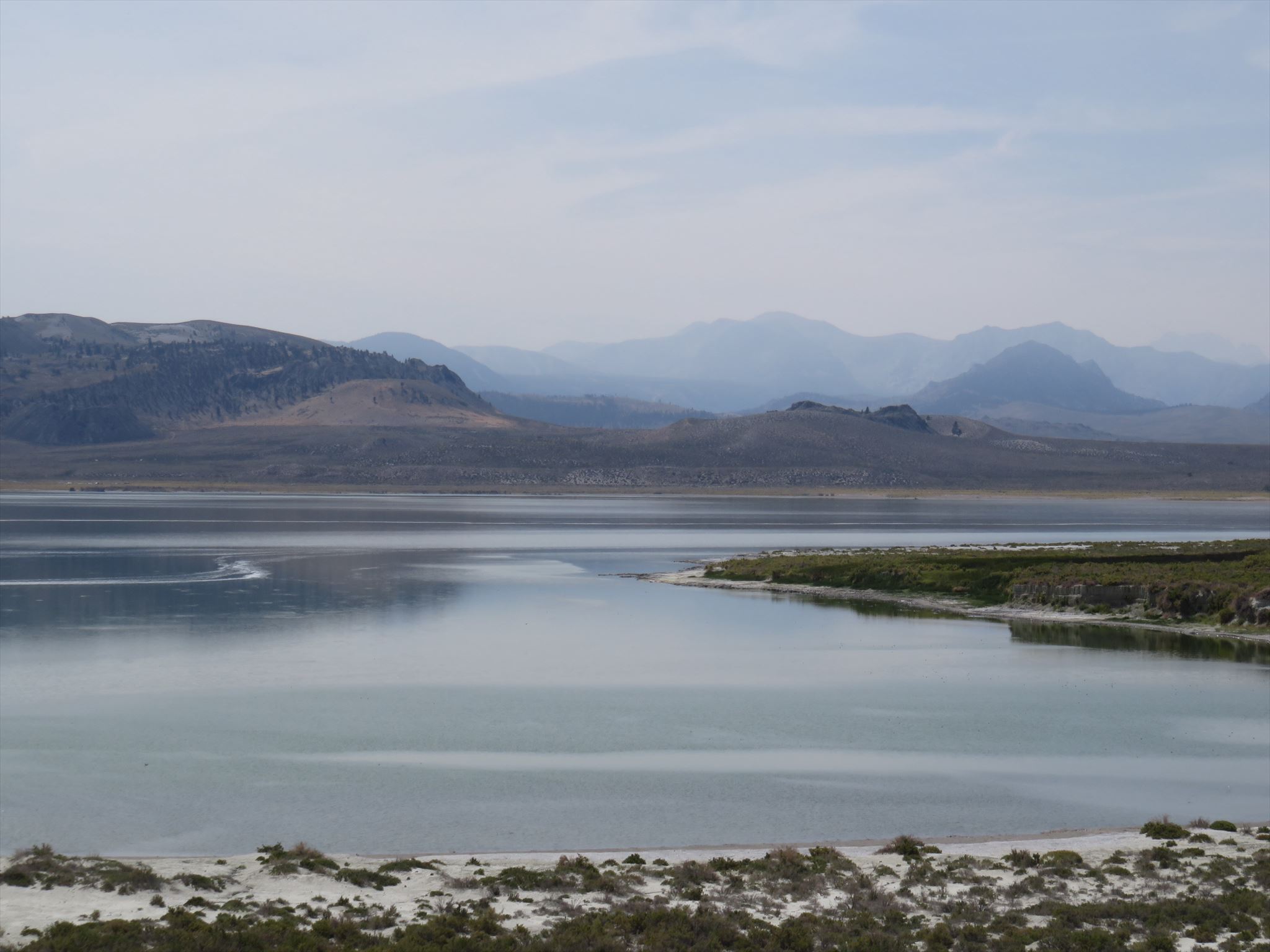
Mono Lake is unique. Sitting at the rugged edge of the Sierra Nevada, it is an ancient, alkaline water that is both primordial and hauntingly beautiful. It is most famous for its tufa towers — calcified limestone spires that rise from the water. Because the lake has no outlet, its water is nearly three times as salty as the ocean, creating a dense, buoyant environment where fish cannot survive. Still, trillions of brine shrimp thrive, fueling a massive migratory corridor for millions of birds.
The Lake has also faced real issues. In 1941, Los Angeles began diverting the freshwater streams that feed Mono Lake. By 1981, the lake had fallen 45 feet in depth and doubled in salinity. The entire ecosystem was threatened. In a landmark decision, the California Supreme Court recognized that the state has an affirmative duty to take the public trust into account in allocating water resources. Rules were specifically set to raise Mono Lake to a healthy level. However, it is still only halfway to the 6,392-foot level, which serves as the goal. The Mono Lake Committee continues its work to save the lake.
It is “the duty of the state to protect the people’s common heritage of streams, lakes, marshlands, and tidelands.”
— Justice Broussard
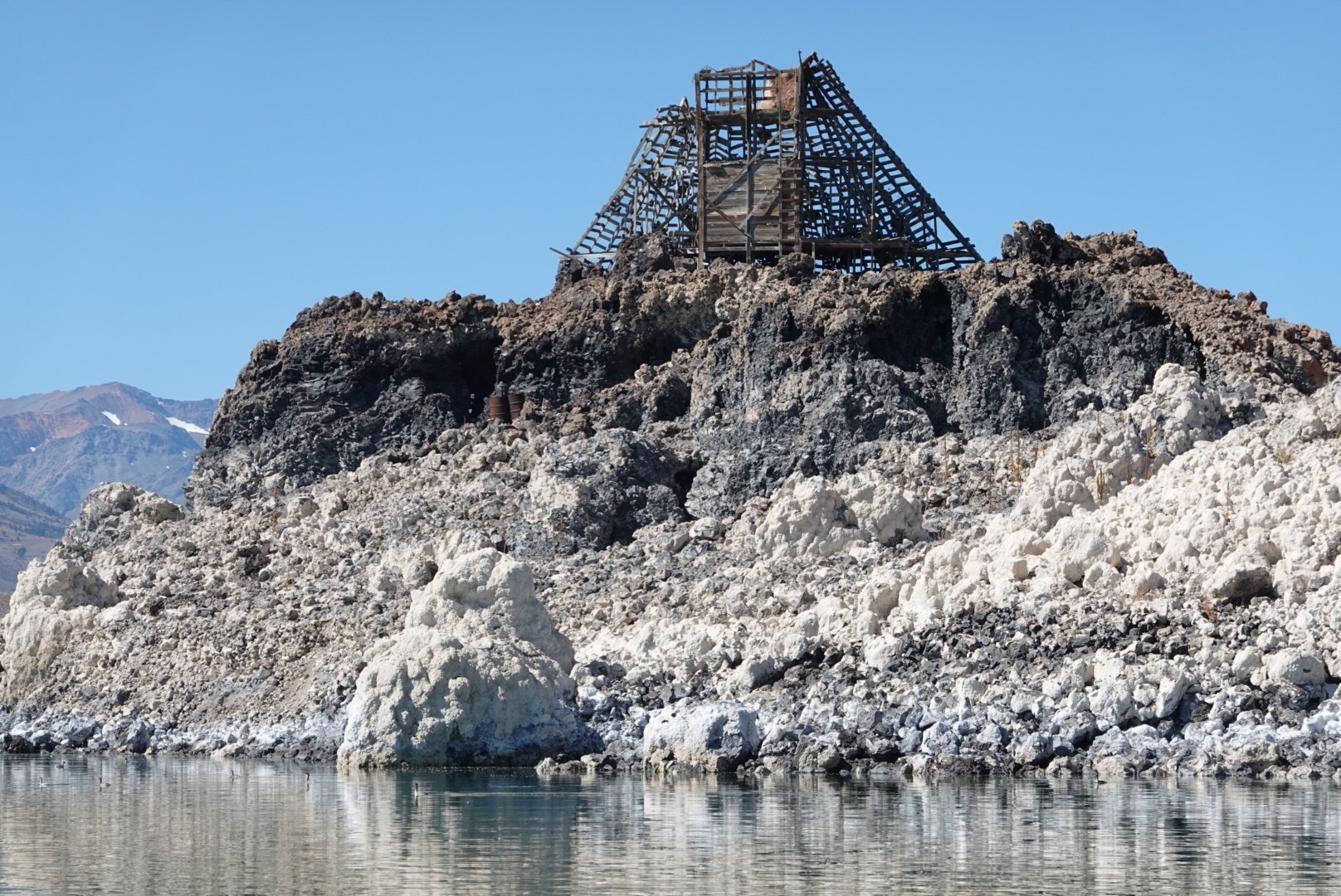
We have twice camped at Pahoa Island, where we had the lake to ourselves. Besides geocaching, we explored the remains of a sanitarium, kayaked further to see an old volcano constructed for the Fair Wind to Java movie, and explored volcanic vents. To camp there with the dark sky and only the sound of the lake was something never to be forgotten. The morning brought a new stillness to the water.
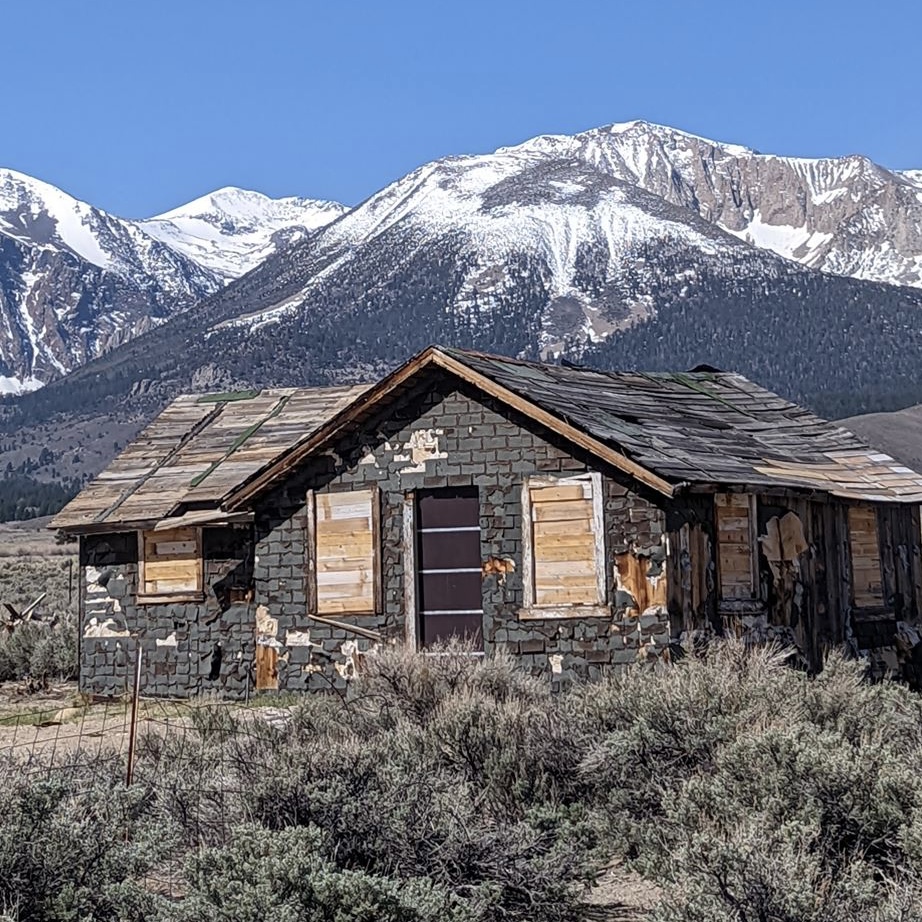
On each visit, we also stopped at Frank Sam’s Cabin. It is within sight of the lake and is one of the most significant landmarks in the area.
I first stopped here without knowing anything about it. It was an old, dilapidated building. Stopping for ruins is what I do. However, I later read the cache description and learned some of its important story.
The cabin is one of the last remaining structures from old Farrington Ranch. Sam himself was a descendant of leaders during the Mariposa Indian War. It was intriguing enough to stop again.
I was glad to see that it had been maintained since my first visit. It still maintained its look and feel, but was not abandoned. There was a feeling of community. It seemed that it belonged.
It made me want to find more information about it. In the process, I ended up rewriting my original log in some respects, which is a strange thing to do. Logs are rarely read, and those that have dropped from the listing page are read even less. Still, if a log is worth writing, it is worth writing two or three times.
My Log
Frank Sam was a peyote spiritual leader.
He was the type of person who helped anyone who needed it. Frank became a good friend of Ben Farrington, who first owned the land. Farrington promised land to Frank. As Bethany Sam, one of his descendants, wrote, “With that simple promise, Hubee Frank became the original owner of the ‘Old 395 House.’” Frank had applied for allotment under the Dawes Act, but there is no record that it was finalized. The cabin was his tie to the land and his people.
He and his wife later died in a car accident. He is buried at Mono Lake.
Bethany’s account tells of her family, which included Sioux who fought Custer. She grew up in the area and spent time with her great-grandmother, who spoke only Paiute, had a pet bobcat, and picked cherries and pinenuts in addition to making baskets. The connection with this area runs deep, and her story is important.
The indigenous nations of the Mono Basin never ceded any of their land. It was simply taken. One of the state’s first acts was to disavow any native land claims. Those who survived had to figure out how to navigate a strange legal landscape. They were the dispossessed.
The property was one of the few that remained in Native hands. When Los Angeles began to control the water, they kicked the indigenous people off the land and tore down buildings. Native children were forbidden to speak their language at school. Some, like Frank, worked on nearby ranches, but the native population fell to fewer than 100. Despite all, the tribe endured.
Tribal members have long worked to achieve federal recognition and preserve the lake. It is important to acknowledge that this is Kootzaduka’a land.
Footnote
The indigenous people were the Kootzaduka’a, which may be translated as “pine nut eaters.” There are layers of meaning to the name. The tribe states, “The Kootzaduka’a homeland is the region where one would find the Kootzaduka’a people. It is where one would hear Kootzaduka’a spoken. It is the region where the Kootzaduka’a were brought into being.”
The tribe has an important role in protecting the water and resources here. Last year, the Kootzaduka’a acquired 160 acres of ancestral land known as Tupe Nobe (Rock House) in Mono County. The land holds deep historical and spiritual significance, serving as a vital link to support tribal-led initiatives, fostering community resilience and traditional practices.
04/30/2022